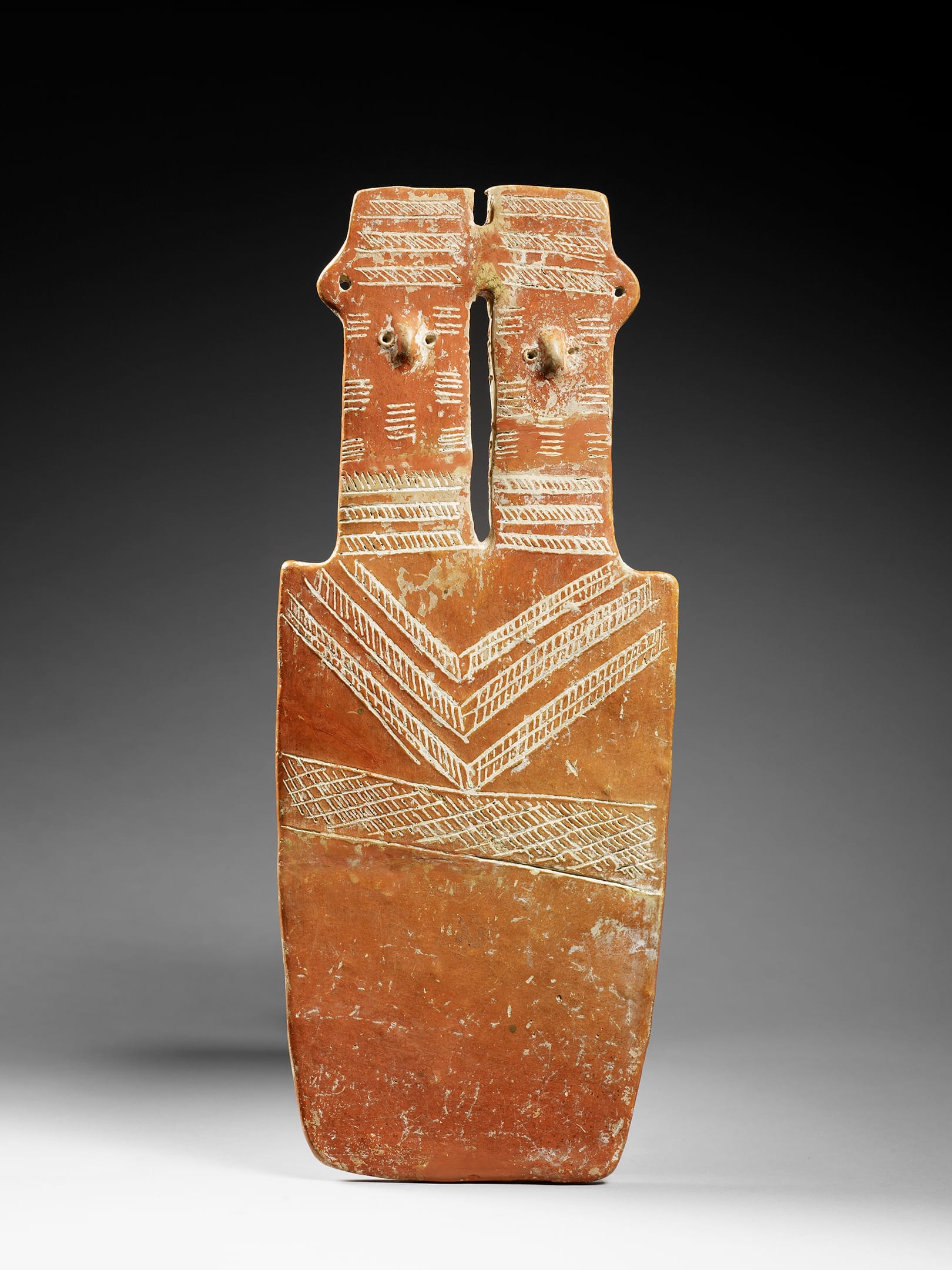
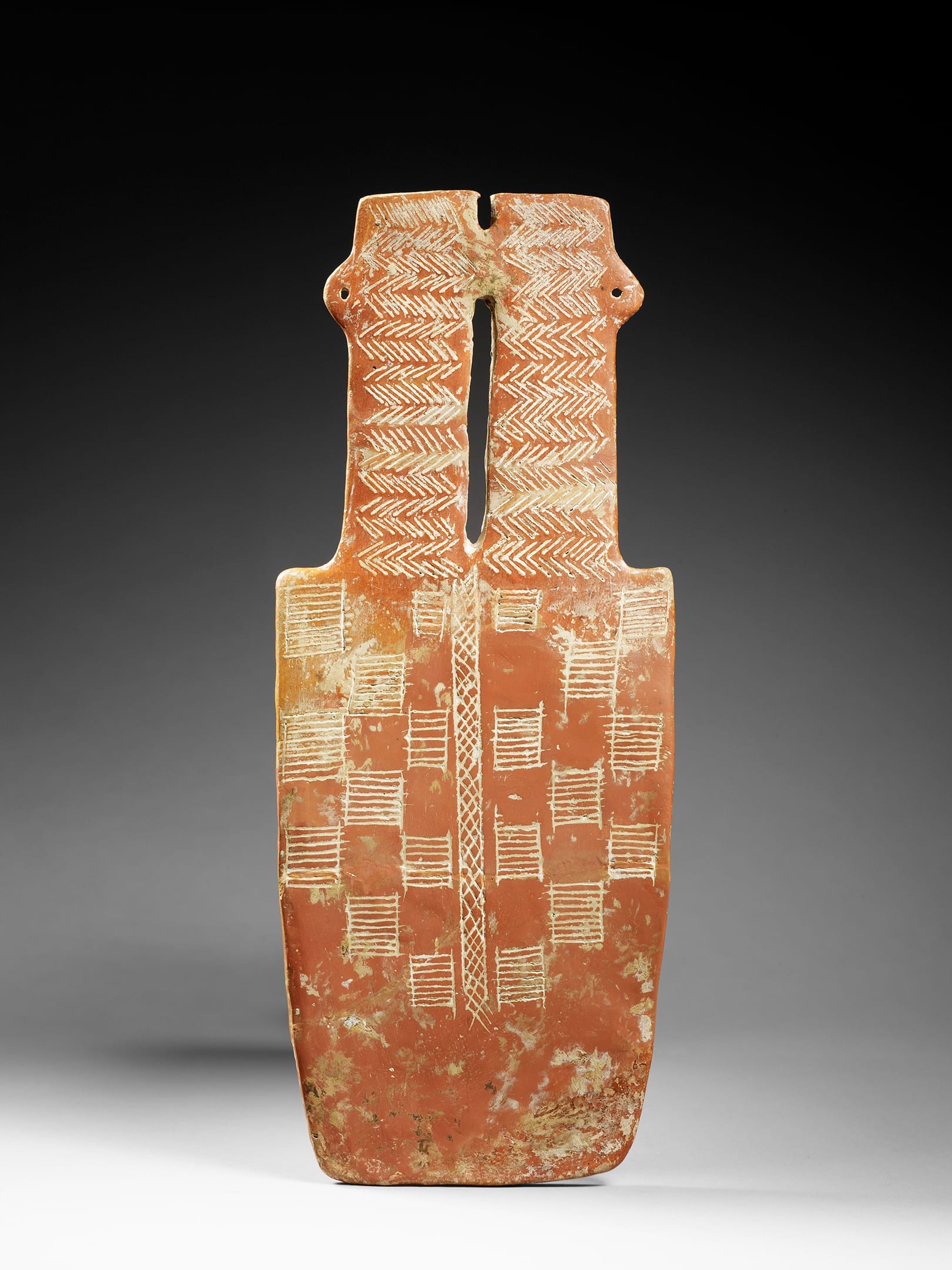
This Cypriot idol is a splendid example of the geometrical representation of human forms, a trend that appeared during the 3rd millennium BCE and found both in the Mediterranean area and in Anatolia. Cut out of a sheet of clay, as its name suggests, this statuette is distinguished by its Siamese-twin heads. The faces and body bear incisions to suggest decorative elements, clothing and even tattoos or scarring. While the two heads have a single body seen from the front, the back of the statuette suggests two separate figures.